


…

Before you begin, remember that you have an index with the newsletter content organized by clicking below.

From an observed trade to a working explanation
Suppose a fund sells a bond on Thursday and owes its investors cash on Friday. The manager may have doubts about the issuer, or the fund may need the sale proceeds. Both motives fit the trade record. To explain the sale, reconstruct what the manager knew, how else the fund could raise cash, and when the trade would settle. The price also depends on how much risk a buyer is willing and able to take.
What’s inside
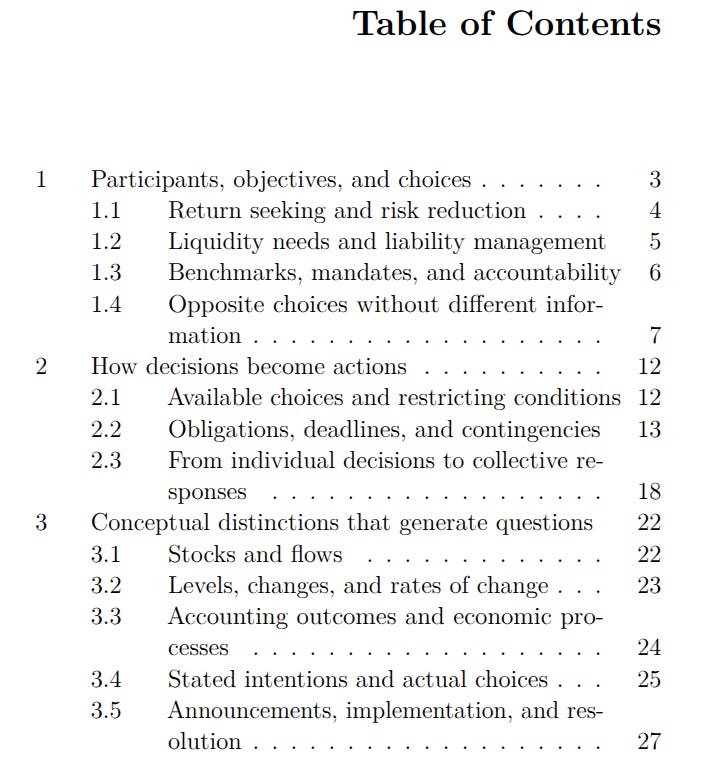
Explain why both sides would trade. Consider an exporter due to receive a foreign currency and an importer with a bill to pay in that currency. The exporter can sell it forward to the importer. Both lock in an exchange rate even if they share the same forecast.
Distinguish mandates from benchmarks. If a fund caps a holding at a percentage of its assets, losses elsewhere can push that holding’s weight above the limit. The mandate may allow time to adjust. Even within the rules, the manager may have to defend a position that caused the fund to lag its benchmark.
Trace what a deadline sets in motion. If a firm owes a supplier money as soon as an inspector signs off, it may arrange credit before it knows the payment date. Other clauses leave room for choice. Late delivery might give a buyer the right to cancel an order it still wants filled.
Connect individual orders to market prices. Several funds may review the same bond when its eligibility changes. If many try to sell at once, buyers with limited cash may bid less. Sellers can accept the discount, offer fewer bonds, or wait if their obligations allow.
Ask what the figures measure. Holdings can gain value without a purchase, and unit sales can rise while their growth rate falls. Higher receivables could mean the company shipped more goods, customers paid late, or the company gave them longer to pay.
Separate an announcement from a commitment. News of a proposed subsidiary sale can change investors’ expectations immediately. The agreement sets out what each side has promised and which approvals it still needs. If the deal closes, the buyer pays and takes ownership.
Find the step the evidence leaves open. The fund’s payment schedule can establish Friday’s deadline. Calling the sale forced assumes the manager had no other way to make the payment in time. If the fund had an unused credit line, how quickly could it draw the money and at what cost?