


Table of contents:
Introduction.
Davos forum.
Greenland.
The Board of Peace.
Ukraine and Russia.
Audio Note: Before we begin, remember that if you’re accessing this article through the Substack app, you can listen to it instead of reading it. The MarketOps section is best suited for this format.

Before you begin, remember that you have an index with the newsletter content organized by clicking on the image below.

Introduction
Late January 2026 produced one of those rare geopolitical moments where three normally separate worlds collided in the same week: alliance management, institutional redesign, and war diplomacy. Davos didn’t invent any of these pressures, but it concentrated them into a single theatre where statements landed as signals, signals moved prices, and governments had to react before they had time to agree on what, exactly, they were reacting to.
The goal here is to interpret the sequence of events and targets, what constraints are real, and where the story is likely to harden into policy rather than dissolve into rhetoric. The Greenland dispute matters as a test of how far economic coercion can be blended into security bargaining inside alliances; that’s why European institutions were already discussing serious countermeasures days before the Davos optics settled. The Board of Peace matters as a signal about who gets to define legitimacy and what it will cost to participate in the next generation of problem-solving forums. And Ukraine matters because it is where institutional experiments meet the hardest possible negotiation variable—territory—under live military pressure, with talks moving into formats that were still unusual as of January 2026.
If you want to treat this article as a single sentence, it’s this: January 2026 was a live demonstration of how modern power can compress timelines, bundle tools, and force everyone else to respond across mismatched clocks, from markets to ministries to alliances.

Davos forum
Trump’s Davos appearance as a deliberate disruption: the moment the forum stops being a useless circus and becomes a live demonstration of leverage—Europe “thrown off balance,” elites shaken, and the implicit instruction to allies being, in effect, “Trump has arrived—don’t move.” That rhetorical packaging matters because it describes something real about Davos 2026: the arrival was a venue shift.
Davos became, for a few days in late January 2026, a compact negotiation arena where trade threats, Arctic security, institutional architecture, and the Ukraine diplomacy track all got pulled into the same gravitational field, in front of cameras, markets, and the people who have to implement policy the morning after.
What made it a shock is the compression. In normal diplomacy, signals travel slowly: a tariff threat gets floated, ministries draft responses, allies coordinate, and only later do leaders meet. Here, the sequence reversed. In the days before Davos, EU capitals were already scrambling because Trump had tied tariff pressure to Greenland—an extraordinary escalation that pushed serious discussion in Europe about using the EU’s Anti-Coercion Instrument and preparing a tariff package as an answer to what was being read as coercion, not bargaining. When Trump then arrived in Davos and presented a framework for a future agreement after meeting NATO Secretary General Mark Rutte, the immediate effect was not clarity but whiplash: Europe’s emergency posture was suddenly being asked to respond to a deal that, by its own description, was still only a framework, with further discussions and no publicly settled text. That mismatch—high-stakes consequences with low textual certainty—is a big part of why the moment landed as destabilising even when it looked, on the surface, like de-escalation.
The Greenland episode is the cleanest example of the Davos effect because it fused symbolism and mechanics. Greenland is sold as a piece of ice, something almost deliberately trivialised to project inevitability and simplicity. But the policy reality around it is the opposite: Greenland sits at the intersection of NATO alliance commitments, Arctic basing and early-warning infrastructure, and the politics of sovereignty inside the Kingdom of Denmark.
The Davos week describes a framework that would expand U.S. military access under an updated arrangement with Denmark and Greenland while also explicitly trying to keep Russia and China out of the island’s economy—an aim that turns ice into a contested strategic node. The NATO layer matters because it gives the episode institutional scaffolding. Rutte’s public posture—emphasising that more work is needed and pushing for speed, even hinting at senior commanders working quickly and hoping for results as soon as early 2026—signals that NATO is being used as a channel to translate a Trump demand into an allied process, rather than leaving it as a purely bilateral U.S.-Denmark standoff. And yet, precisely because the framework was not presented as a finished treaty, Denmark and Greenland immediately reverted to red lines language in public: sovereignty is not negotiable, access is one thing, ownership is another, and the distinction is existential for Copenhagen and Nuuk.
That is where the arrival dynamic bites: Trump’s Davos posture effectively forced multiple audiences to react on different clocks. Markets trade headlines in seconds. Political systems trade legitimacy over weeks and months. Alliance systems trade commitments over years. You can see the market clock explicitly: it highlights a Truth Social post claiming a framework and saying tariffs due February 1 would not be imposed, followed by an immediate rally narrative.
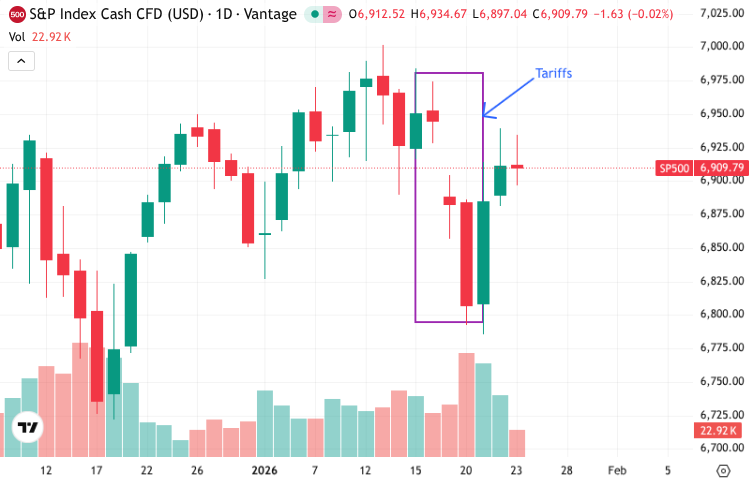
In the same window matches the broader direction: relief buying after the walk-back of tariff threats and the ruling out of force fed a risk-on move in equities alongside currency moves, while safe-haven demand for gold remained intense in the background—an emblem of how investors simultaneously priced near-term crisis off and regime uncertainty on. When the underlying object of negotiation is alliance credibility—one NATO member’s territory being pressured by another—markets can bounce on the de-escalation headline while strategic planners still see the episode as a precedent that changes their base assumptions.
Europe’s thrown off balance posture isn’t just theatre; it reflects a genuine coordination problem. If a leader can credibly float tariffs tied to a territorial demand, and then credibly withdraw them after a private meeting while still insisting the objective is vital to U.S. security, Europe is forced into a narrow corridor: it must demonstrate firmness (to deter coercion) without escalating into a trade war that it may not control. That’s why, even with the apparent Davos climb-down, EU messaging pivoted toward deterrence language and tool-readiness—defend itself against coercion—rather than celebration. It is also why analytical voices immediately interpreted the crisis as a strategic autonomy accelerant, not a one-off storm: the lesson is how Europe just saw what coercion feels like in real time, and the next round may not be so reversible.
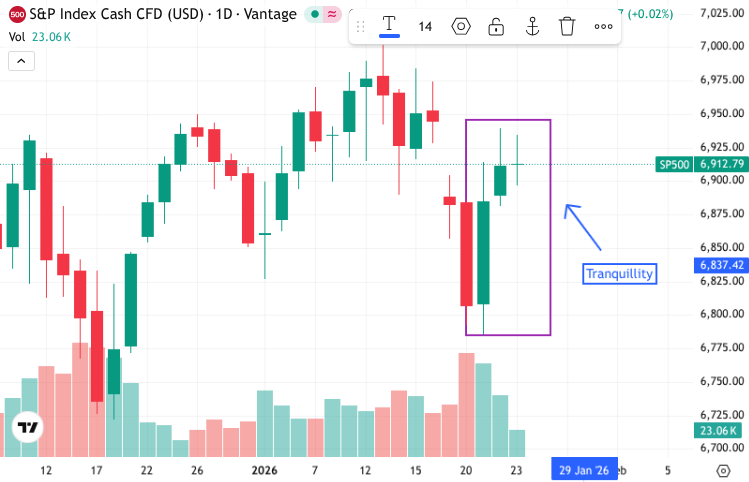
Davos amplified the psychological component because it made policy feel performative, and that performance had consequences. Even if you strip out the metaphors, the functional claim stands: Davos is one of the few spaces where an American president can apply pressure, offer a partial concession, and reframe the narrative within the same news cycle, with CEOs, finance ministers, and heads of government acting as both audience and transmission medium.
The same trip that contained Greenland de-escalation also included Trump using Davos to call for immediate negotiations on purchasing Greenland and to link it to the Golden Dome missile-defense concept, a linkage that widens the issue from diplomacy into long-horizon defense procurement and basing strategy. This is why the episode felt bigger than Greenland. It signalled that economic tools (tariffs), alliance tools (NATO channels), and strategic-industrial tools (missile defense architecture) are being treated as an integrated lever set.
The Board of Peace sequence deepened the shock because it pushed the same logic into global governance. Trump launched the Board at Davos with 35 countries signing on, while explicitly describing it in ways that some diplomats and analysts feared could rival or sidestep the United Nations, including talk of permanent membership, significant funding requirements, and an action-first posture around conflict management. Reporting from multiple outlets during the same window noted reluctance from major allies to sign up immediately, precisely because joining something perceived as a UN competitor has long-tail implications: it changes how legitimacy is conferred, how sanctions or reconstruction funds might be allocated, and who gets to decide what peace means in practice.
Just in case you want to check more about this:

The Ukraine track is where the Davos shock becomes most consequential, because here the setting didn’t just host rhetoric; it hosted process. Zelenskiy travelled to Davos and met Trump, describing security guarantee terms as finalised while acknowledging that territory remained unresolved, and that trilateral meetings among Russia, Ukraine, and the U.S. would take place in Abu Dhabi—presented as a significant procedural step because it would be a first in that configuration. The Davos week to imminent Moscow engagement by U.S. envoys, underscoring that Davos was being used as the visible node in a broader chain: public signal in Switzerland, technical talks in Abu Dhabi, and high-level engagement with Moscow.
Put together, this is why the arrival mattered beyond the day’s drama. Davos 2026 demonstrated a style of power that is less about delivering a fully specified policy and more about creating a moving corridor of constraints around other actors. Europe was preparing countermeasures, then had to recalibrate to a framework. NATO was forced into an Arctic security mediation role while trying to preserve allied cohesion. Markets oscillated between fear and relief because the same actor could generate and dissolve tail risk within 24 hours. The Board of Peace added a meta-layer: if the U.S. is willing to pressure allies on territory and simultaneously prototype alternative governance structures, then the predictable ruleset that many policymakers and investors had relied on becomes less reliable, even when outcomes are temporarily stabilising.
Greenland
What Trump called a framework of a future deal became the central linguistic device of the Davos Greenland episode, and the choice of words is doing a lot of work. In public, Trump presented the meeting with NATO Secretary-General Mark Rutte as producing something real enough to change policy immediately—specifically, real enough to justify withdrawing a tariff threat that had been positioned as leverage. Trump wrote on Truth Social that the U.S. and NATO had formed the framework of a future deal regarding Greenland and the entire Arctic Region, and that based upon this understanding he would not impose the tariffs scheduled for February 1. Here we find the same rhetorical leap and treats it as a pivot point: the framework is framed as present-tense victory, while the future deal is implied as destiny—agreement later, inevitability now.
The difficulty for allies is that framework is an intentionally elastic term. It signals convergence without revealing the trade-offs. It reassures markets and partially calms partners without binding the White House to a precise legal text that could be challenged domestically, rejected by Denmark, or condemned in Greenland. That’s why the immediate aftermath emphasizes that details were unclear and that the path forward remained uncertain even as relief spread. A framework lets Trump claim momentum while keeping maximum negotiating flexibility—and, crucially, it lets NATO leadership claim process (commander-level work, allied coordination, Arctic posture) without validating a sovereignty narrative that would fracture the alliance.
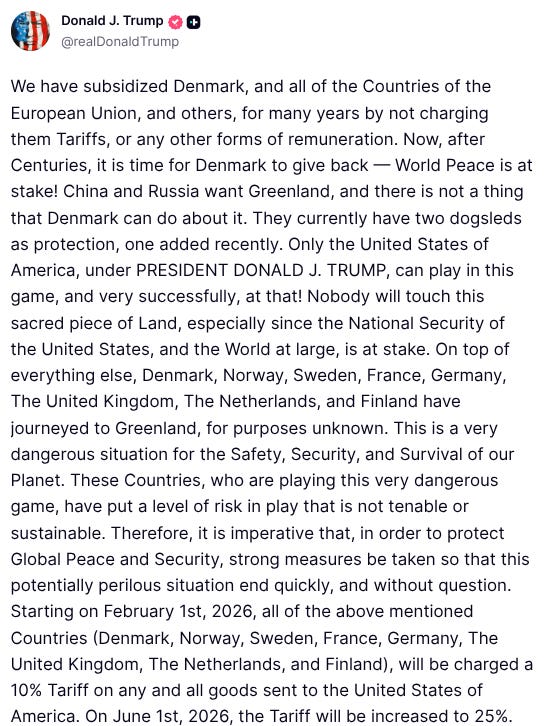
The tariff lever is the clearest proof that the framework language was designed to produce an immediate behavioral response rather than to describe a finished agreement. Over the weekend before Davos, Trump threatened a 10% tariff on goods from Denmark, Norway, Sweden, France, Germany, the United Kingdom, the Netherlands, and Finland beginning February 1, with an additional escalation threat later in the year, explicitly tying the measure to a demand for a complete and total purchase of Greenland, according to the Guardian’s reporting of the Truth Social post. The follow-on reporting in the same outlet describes how quickly the threat triggered apprehension and political backlash in Europe, including language from senior politicians rejecting what they characterized as blackmail.
At the same time, EU officials and governments began weighing countermeasures, including conventional retaliatory tariffs and discussion—more divisive, but far more consequential—around the EU’s never-before-used Anti-Coercion Instrument, which can reach beyond goods into services and market access tools.
Even after the withdrawal, the tariff episode matters because it created a live precedent: intra-alliance disputes, including disputes touching territorial integrity, were made explicitly tradable via customs policy. That is an institutional shock, not just a trade one. The immediate economic damage may have been avoided when Trump pulled back, but the pricing-in problem remains: European leaders now have to treat the threat of punitive tariffs as something that can surface inside NATO-related negotiations, not only in disputes with geopolitical rivals. This is exactly why January 2026 commentary from major policy institutions framed the episode as a marker of a new era of economic coercion rather than a one-off tantrum; for example, Chatham House argued that the Greenland tariff threat should be read as a warning that the UK and Europe must prepare for a world where major powers use trade pressure more openly to shape sovereign decisions.
When you move from rhetoric to what is actually confirmable during and after Davos gives the best sense of what the framework likely consists of in concrete terms. The most revealing details are not the grand slogans about purchase or ownership; they are the quieter, procedural descriptions of what officials think will happen next. Trump and Rutte agreed on further talks between the United States, Denmark, and Greenland to update the 1951 agreement that governs U.S. military access and presence on the island. That same reporting says the framework also calls for prohibiting Chinese and Russian investments in Greenland. If you strip this down to its essentials, it looks less like a sovereignty transfer plan and more like an access-and-denial package: expand or clarify what the U.S. can do militarily, and harden Greenland’s economic perimeter against Beijing and Moscow—both of which the U.S. and NATO frame as increasingly active in the Arctic.
This is where Trump’s total access language becomes so strategically slippery. Trump sayd that the emerging deal would bring total access for the United States, adding “There’s no end, there’s no time limit,” while also noting that he skirted direct questions on sovereignty yet insisted the U.S. must have the ability to do “exactly what we want to do.” That is expansive language that can be heard in two radically different ways depending on the audience. For domestic supporters, it sounds like control. For NATO officials trying to stabilize the crisis, it can be interpreted as maximalist rhetoric describing the broadest imaginable interpretation of access rights—something that can later be narrowed into legal text. For Denmark and Greenland, it is an alarm bell because “what we want” is incompatible with the political reality that Greenland is self-governing, Denmark retains sovereign responsibilities, and both have repeatedly said the island is not for sale.
What makes the 1951 agreement such a crucial anchor is that it already grants the U.S. significant latitude. It established the U.S. right to construct military bases in Greenland and move around freely in Greenlandic territory, with the key condition being that Denmark and Greenland are informed of its actions; the U.S. base at Pituffik in northern Greenland is the enduring symbol of that arrangement. The implication is uncomfortable but clarifying: if the U.S. already has broad rights, then the framework may be less about inventing new permissions from scratch and more about politically rebranding and operationally expanding an existing access regime—potentially adding infrastructure, presence, surveillance integration, or missile-defense-related capabilities under a refreshed Arctic security narrative.
Read more about the treat here: